|
|
|
Researchers engage on jute retting techno
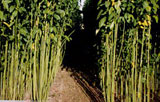
Dhaka, June 23, 2010 (NewshoursBD.com): Following their success in genome sequencing of jute, the
Bangladesh Jute Research Institute is now trying to invent a technology that will
allow jute retting with less water. The new machine will peel off the skin of raw jute.
Later, the fibre will be extracted using a special chemical with low water content providing better output.
The institute’s researcher Dr Samiul Alam announced this on Wednesday at
a press conference organised by young researchers’ organisation Swapnajatra to mark the success of Dr Maqsudul Alam and his team in
genome sequencing. All members of the team were introduced at the conference, including the
35 young scientists, who were involved in the seven months of scientific research.
A number of them shared their experience of working in the team. Maqsudul Alam said, “We are trying to ensure various facilities
including infrastructure to utilise the merit in the country. The researches are receiving government funds. So we will be able to do
something good very soon.”
Addressing the success in genome sequencing, he said, “A number of countries are working on this.
However, Bangladesh has taken the lead.” He said this discovery will allow Bangladesh to invent better strains of
jute, including ones with better fibre and better immunity to diseases. Alam continued to say the benefits of the success will take around five
years to reach the grassroots farmers. The researchers’ organisation called for ensuring employment and
financial support for future researches of everyone in the team.
Source: www.newshoursbd.com/bangla
Jute genome sequence decoded by Bangladeshi scientists
Dhaka, June 17, 2010 (PTI) : Bangladeshi scientists have successfully decoded the crucial genome
sequence of jute, opening up a new vista in the development of the golden
fibre, of which India is the world's largest producer. Prime Minister Sheikh Hasina made the announcement of Bangladesh's
scientific achievement in the Parliament on Wednesday amid cheers and desk thumping by lawmakers.
"This is a glorious event for Bangladesh... with this discovery, jute is
expected to regain its lost glory of being the golden fibre," Hasina said congratulating the discoverer of the genome sequence, scientist Dr
Maksudul Alam and his team members. She also hoped the discovery would help improve the jute fibre quality
and invent species which would also be tolerant to the climate change phenomenon.
Officials and scientists said Bangladesh was the lone country in Asia
after Malaysia to carry out such a high level research led by Alam, a professor of the University of Hawaii.
Alam earlier decoded the genome of papaya in the US and rubber plant in Malaysia, led from the forefront in sequencing the jute genome.
Experts said this gene sequencing would help improve the fibre length and quality, including colours and strength; and develop high yielding,
saline soil-and pest-tolerant jute varieties through genetic engineering.
A genome is all of a living thing's genetic material and it is the
entire set of hereditary instructions for building, running, maintaining an organism, and passing life on to the next generation.
Genome sequencing is a laboratory process that determines the complete
DNA sequence of an organism's genome at a single time. The process is
often compared to "decoding", but a sequence is still very much in code. The Prime Minister said the genome sequence discovery earned Bangladesh
the owner of its patent right while it would restore jute's stake in national economy.
Jute is the second largest fibre crop in terms of cultivation next to
cotton. Bangladesh is the world's second-largest producer of jute, after India, and the world's largest exporter of the
fibre.
Ecotent an innovation from University of Ulster students from Jute
Ireland, June 7, 2010: Ecotent an innovation from University of Ulster students Houston Reid,
Stephen Cladwell, Terri O Kane & Jonathan Garland is a two man tent
constructed completely of 100% biodegradable materials which will solve
the problem of clean up operations after music festivals.
The main covering is made from jute tarpaulin, a canvas made from jute.
Research confirms major ecological benefits - it is 100% biodegradable,
it is the fastest growing crop, with a much higher CO2 assimilation rate
than trees. And when discarded, jute totally decomposes, putting
valuable nutrients back into the soil.
Congratulating the award winners on their successes, Republic of Ireland
Minister for Trade and Commerce Billy Kelleher said: These awards are a really important opportunity for third level
students to test their flair for business. These young people are our successful
entrepreneurs of the future. They show all the hallmarks of the innovative and resilient entrepreneurs and management teams on which
the success and long term strength of Ireland?s economy depends.
Irish companies that are export focussed, innovation-led, have excellent management teams and are lean and competitive can exploit the
emerging opportunities that we are now seeing with the positive uplift
in the economy. These students show every evidence of playing a part in
that economic uplift. Source: University of Ulster
|
|



